Kyle Poyar writes The Gist, a short series in Growth Unhinged that gives readers one action to take. This edition inverts the usual advice and asks what you should stop adding to your site.
It runs on our data, so we are not a neutral party here. We are including it because the argument holds up whoever makes it, and because Kyle frames it more usefully than we have.
The argument
To improve conversion, try doing less
Simple and straightforward beats complicated and overworked.
Growth experiments are almost always about addition. What if we add more social proof, what if we add a video, what if we add an email capture box. Adding things is how teams justify their contribution.
Stripped down keeps prospects focused on the core action, and it signals that the brand and the product stand up without the clutter.
The evidence
Three bets that almost never work
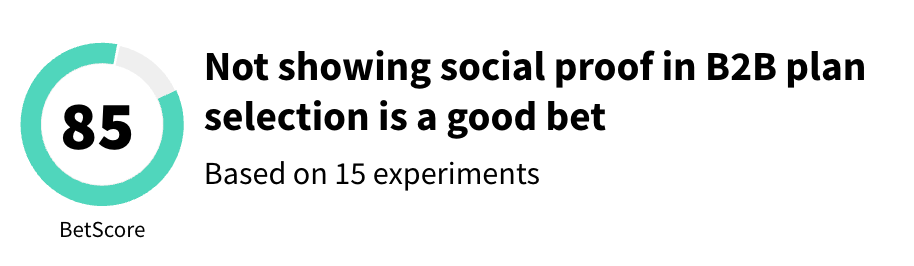
The piece asks which experiments get tested constantly and almost never pay off. Three stood out on BetScore, our measure of how likely a change is to win, on a scale of 1 to 99.
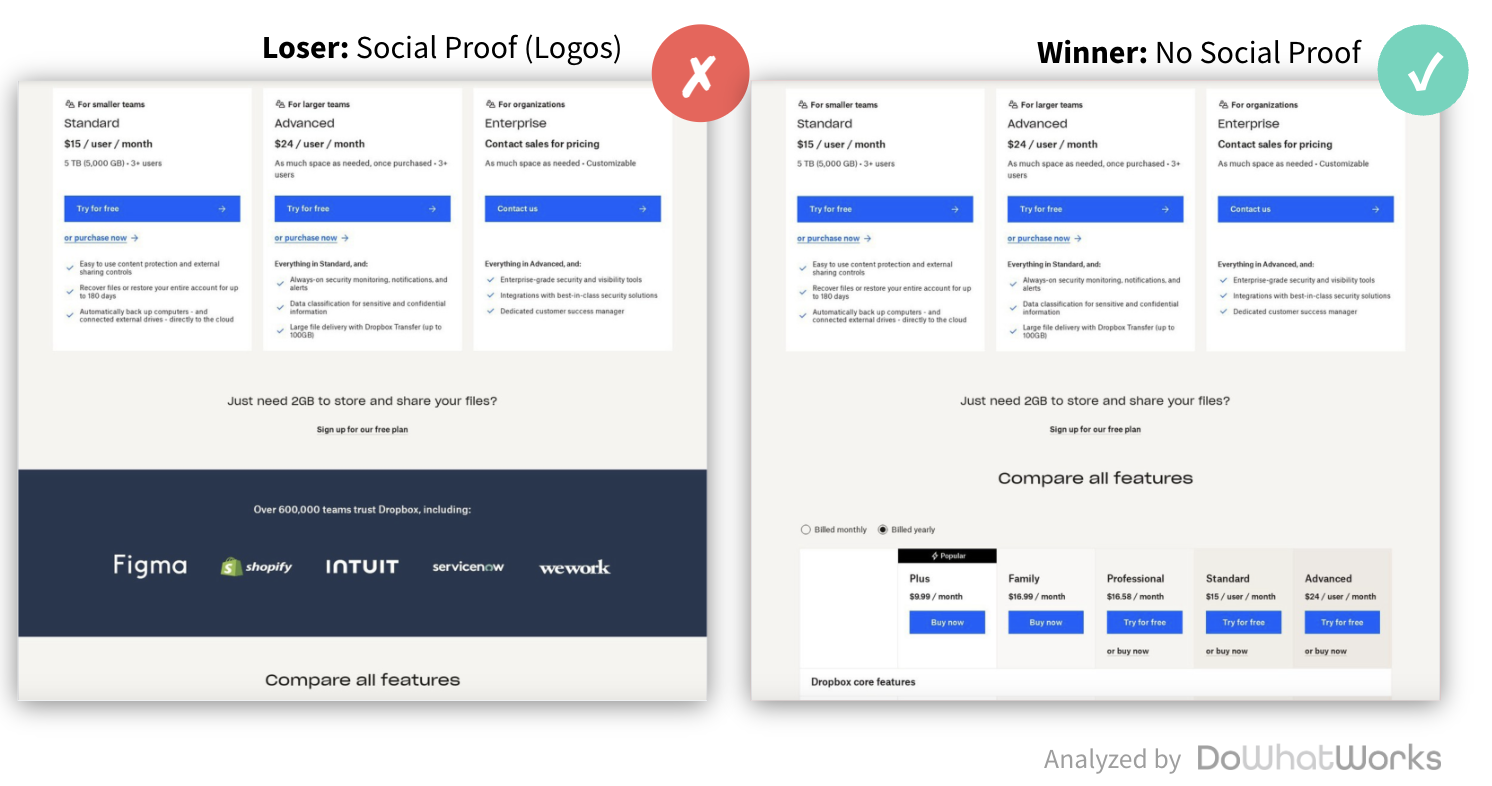
Social proof in B2B plan selection Not showing social proof scores 85, across 15 tracked experiments. Examples include Dropbox, Jotform and Glofox. At Jotform the simpler “why choose Jotform” messaging beat inserting a trusted G2 leader section above it.
Videos on the homepage The second of the three. The detail sits behind the paywall.
The third bet Also subscriber only. Worth the click if the first two land for you.
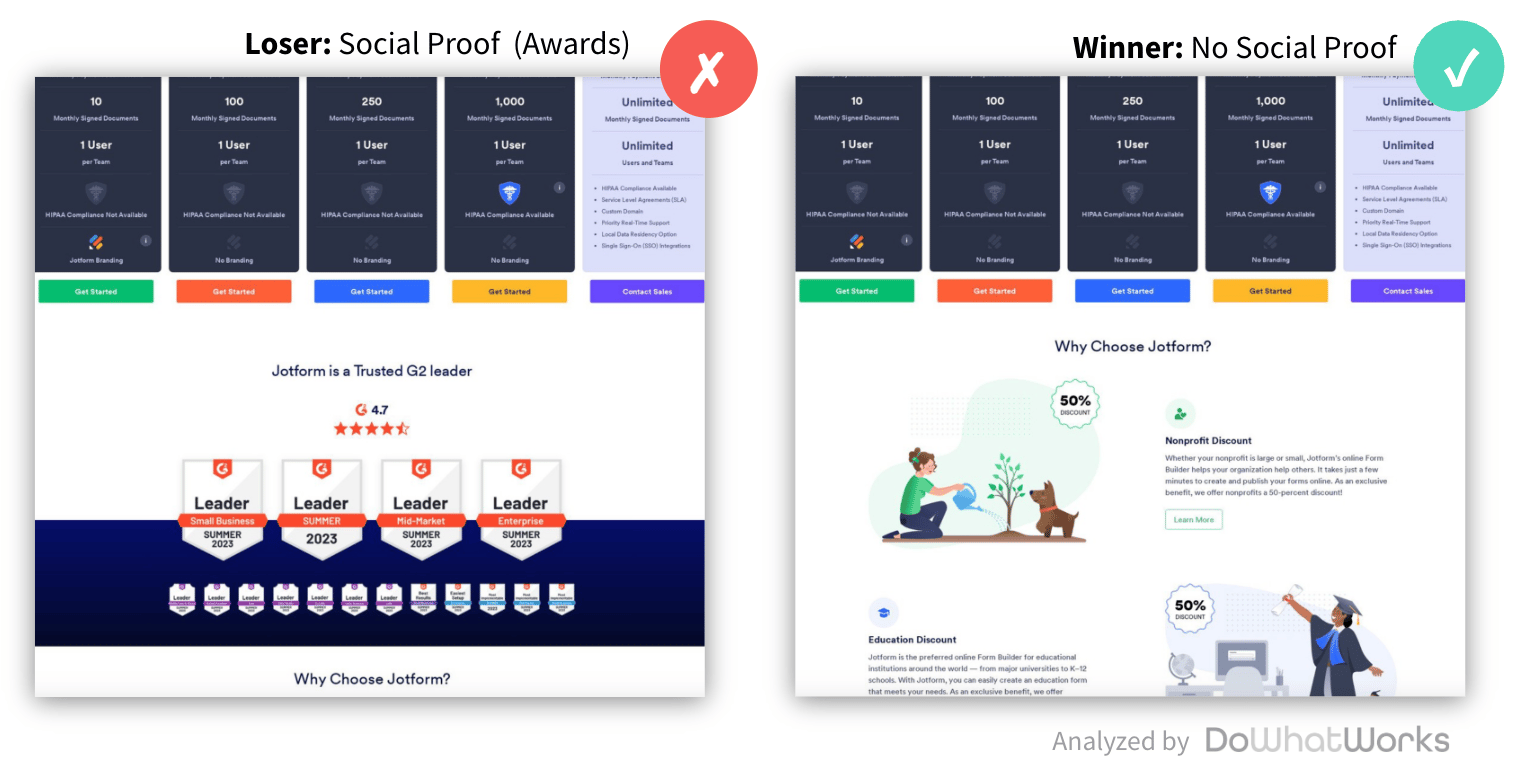
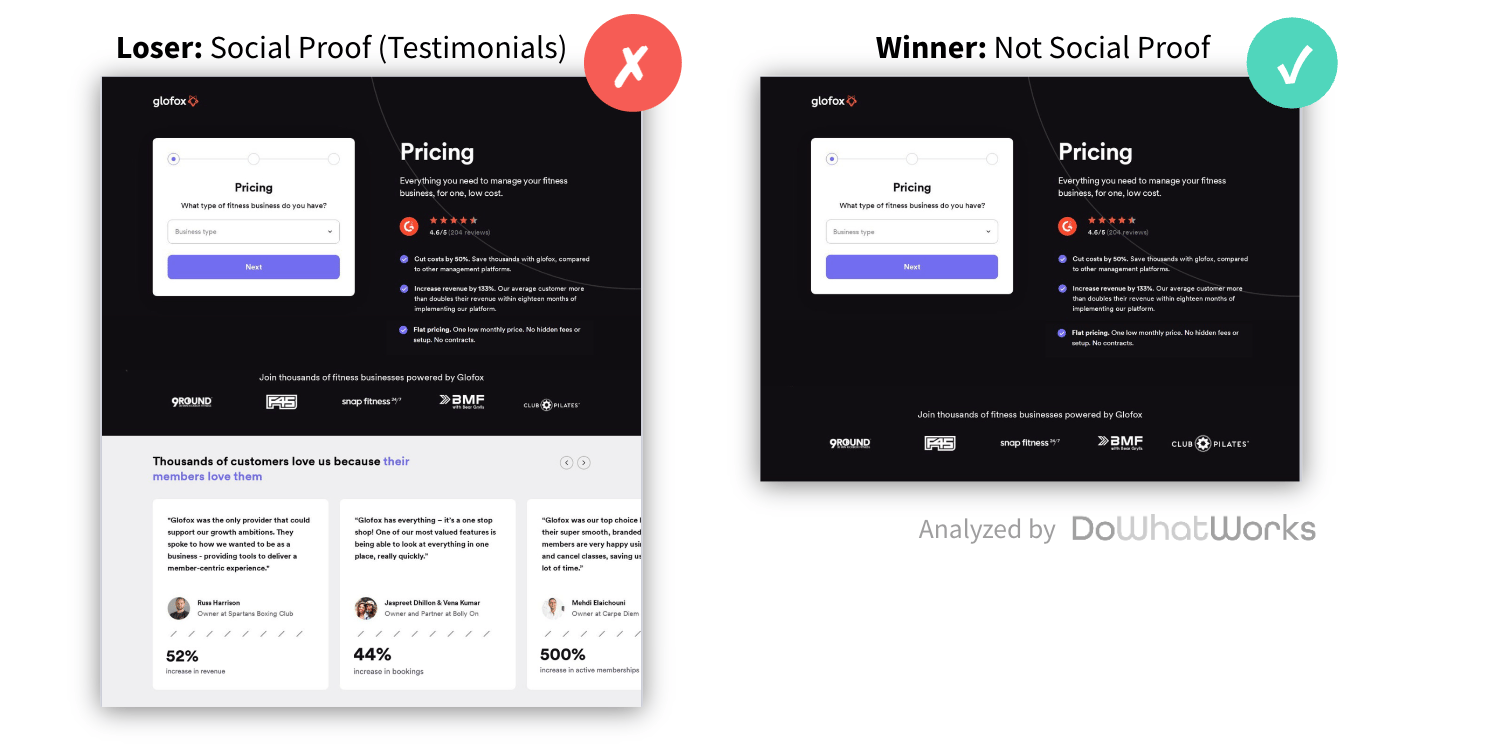
All three are head to head tests on live pricing pages, and all three went the same way. That is the part worth sitting with: none of these are bad executions of social proof. They are competent versions that lost anyway.
There is a second benefit Kyle raises that rarely gets counted. Removing a social proof section also removes the standing obligation to keep it current at the request of whoever asked for it last.
Our note
Why this one is worth your time
Most conversion writing is a list of things to add. This is one of the few pieces that treats removal as the intervention, and it gives you permission to close tickets rather than open them.
It also pairs closely with our own work on social proof, which reached the same conclusion from a different direction. If you only read one of the two, read this one first. It is shorter and it tells you what to do.