I spend a lot of time looking at AI messaging tests.
A lot of time talking with CMOs and product marketing leaders and VPs, discussing how to position their agent's differentiation.
It's a high-stakes, high-impact side of modern brand narrative.
I recently had dinner in San Diego with a lot of top SaaS executives who worried that new entrants like Claude were going to make parts of their tech obsolete.
So I wanted to take some time to get into what we see being tested and what we can learn from it.
There are a few major trends…
The pattern
The best brands are defining the battleground.
A perfect example is Lightfield, an AI-native CRM.
They do two incredibly impactful things.
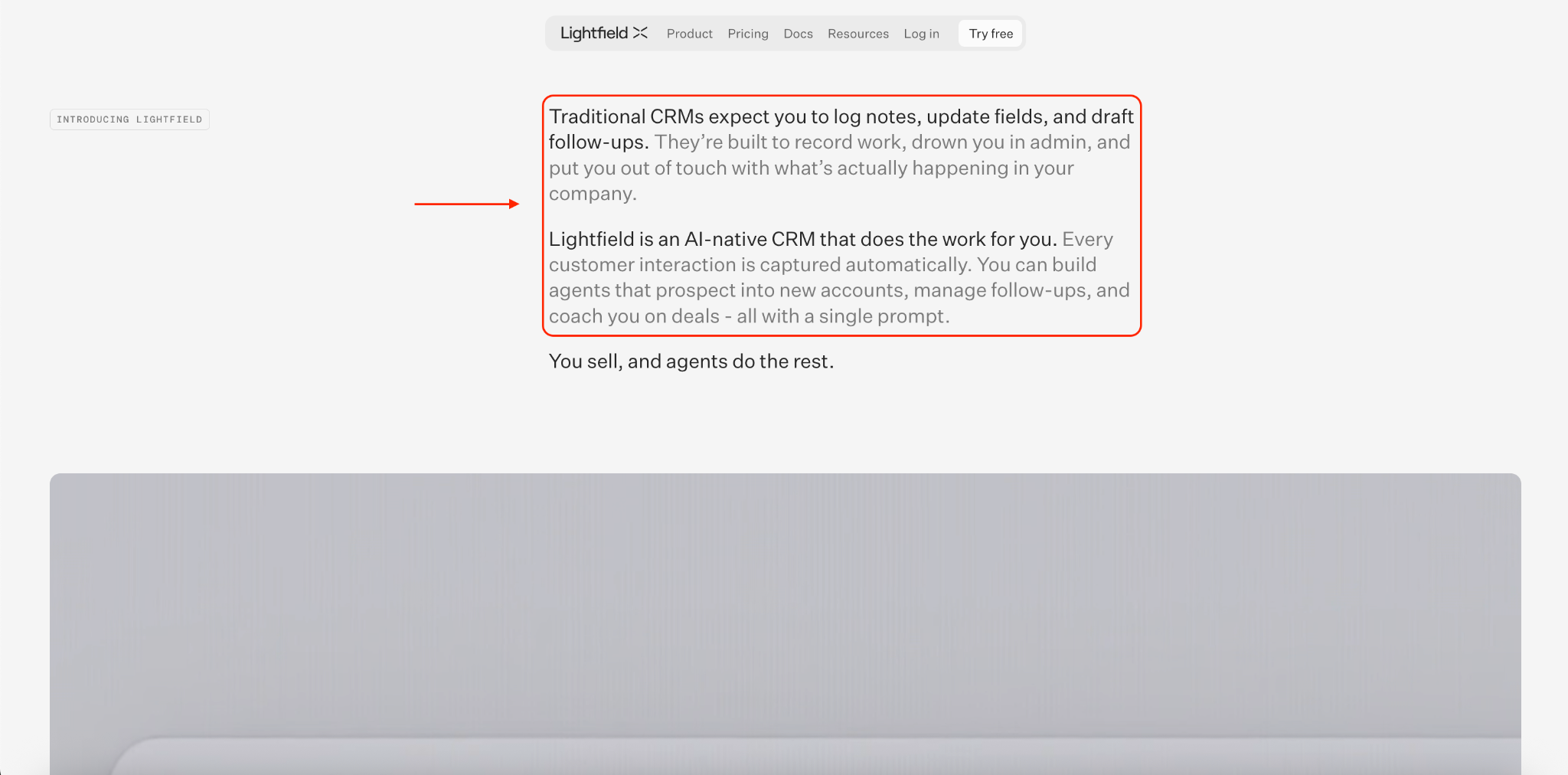
First, they cast a clear "enemy" → "Traditional CRMs expect you to log notes, update fields, and draft follow-ups. They're built to record work, drown you in admin", vs. what they claim to do → "Lightfield is an AI-native CRM that does the work for you. Every customer interaction is captured automatically. You can build agents that prospect into new accounts, manage follow-ups, and coach you on deals - all with a single prompt."
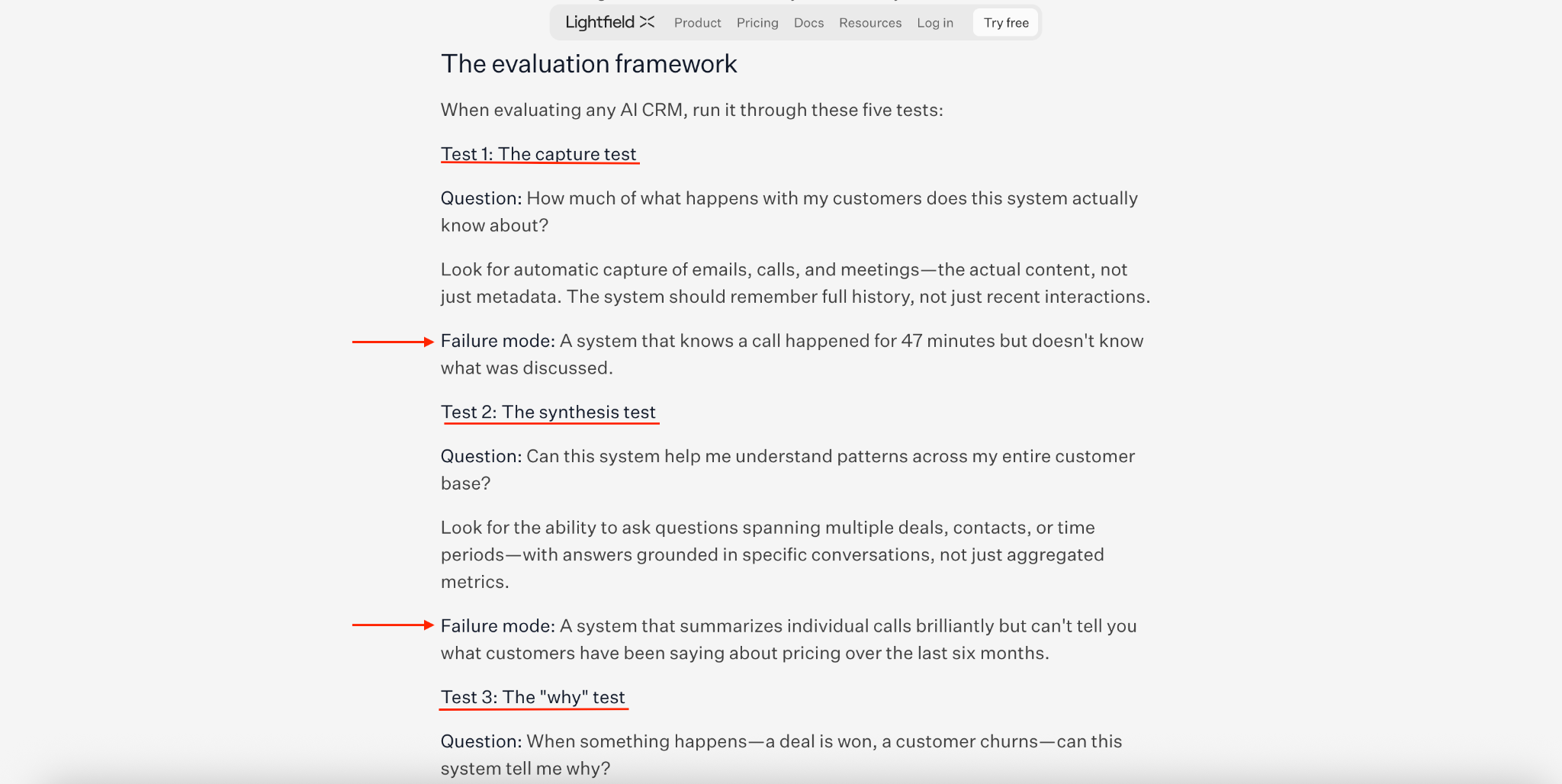
Second, they have a detailed guide on their website called "The Founders' Guide to evaluating an AI-native CRM". This guide starts by clarifying what different people mean when they say "AI-native", which is certainly ambiguous nowadays. Then they give a set of structured tests to determine if a CRM is truly AI-native. This is not only instructive to prospects but also the exact type of content that indexes very well in LLMs.
Specificity
Talk about your agent's capabilities, not generic outcomes
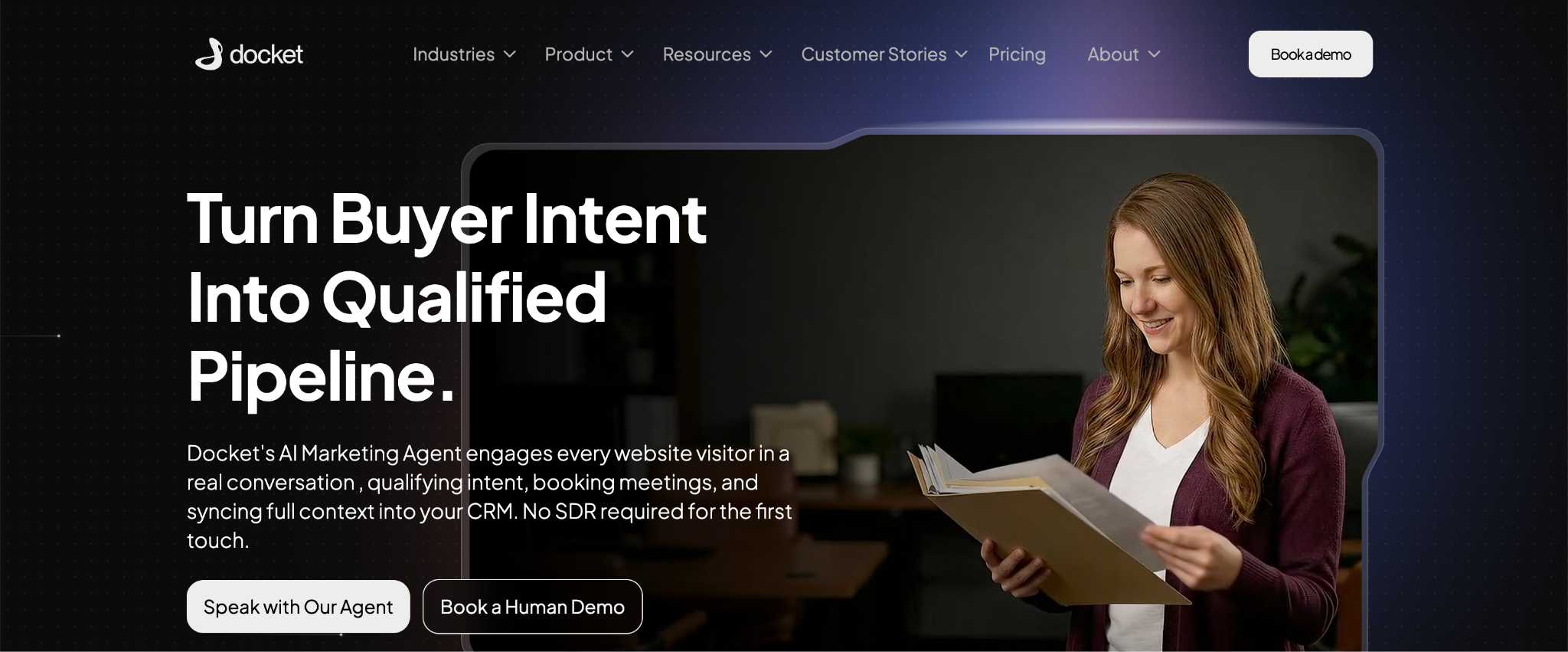
A perfect example of this executed well is what Docket tested into → "Docket's AI Marketing Agent engages every website visitor in a real conversation, qualifying intent, booking meetings, and syncing full context into your CRM. No SDR required for the first touch."
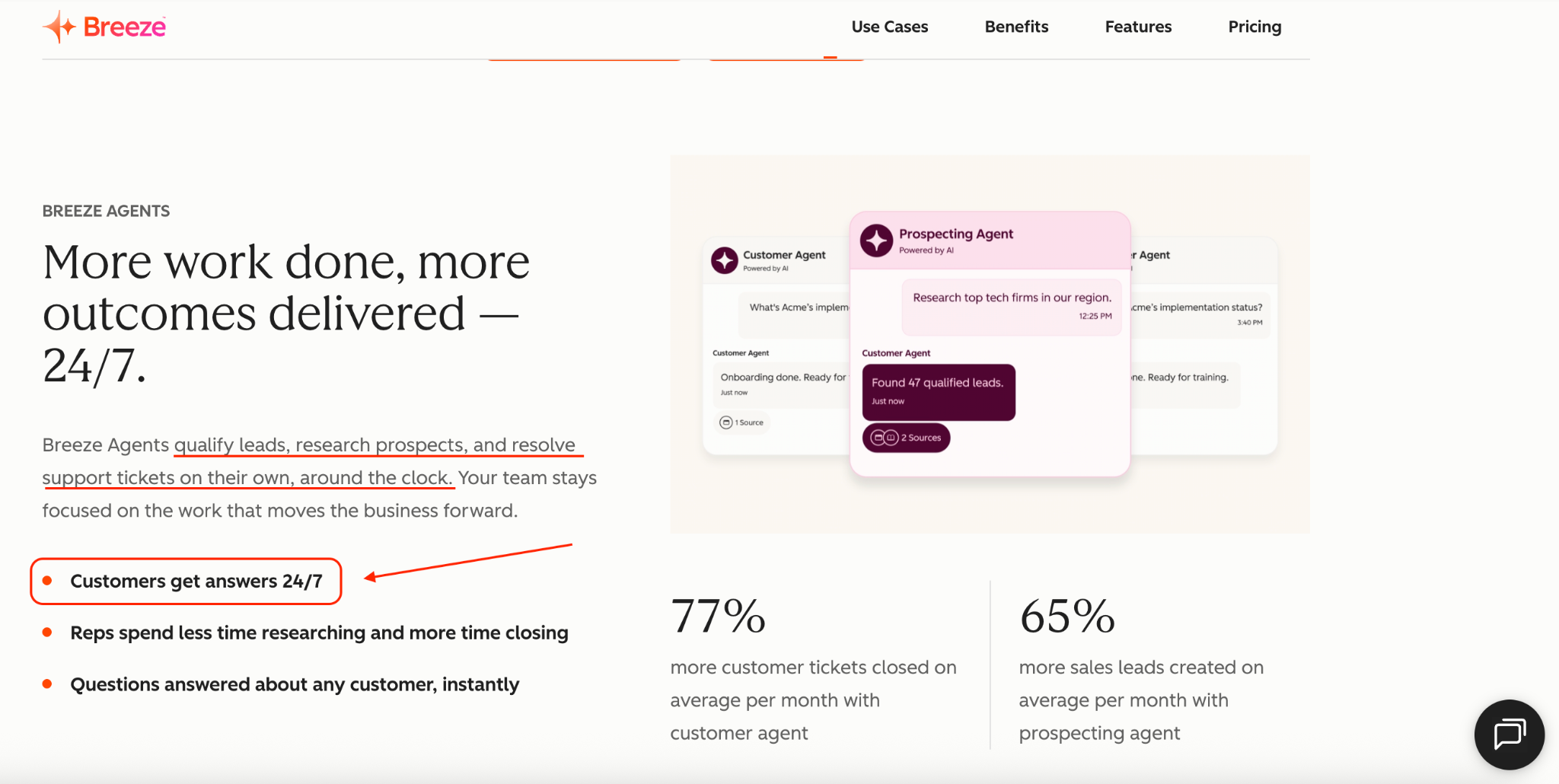
If you look at product pages from brands leaning heavily into their AI positioning, you will find teams like HubSpot covering both their agent's (Breeze) capabilities, "Breeze Agents qualify leads, research prospects, and resolve support tickets on their own, around the clock" but also speaking to a specific pain point "Customers get answers 24/7"
Comparisons
Build comparisons of your product against Claude and ChatGPT.
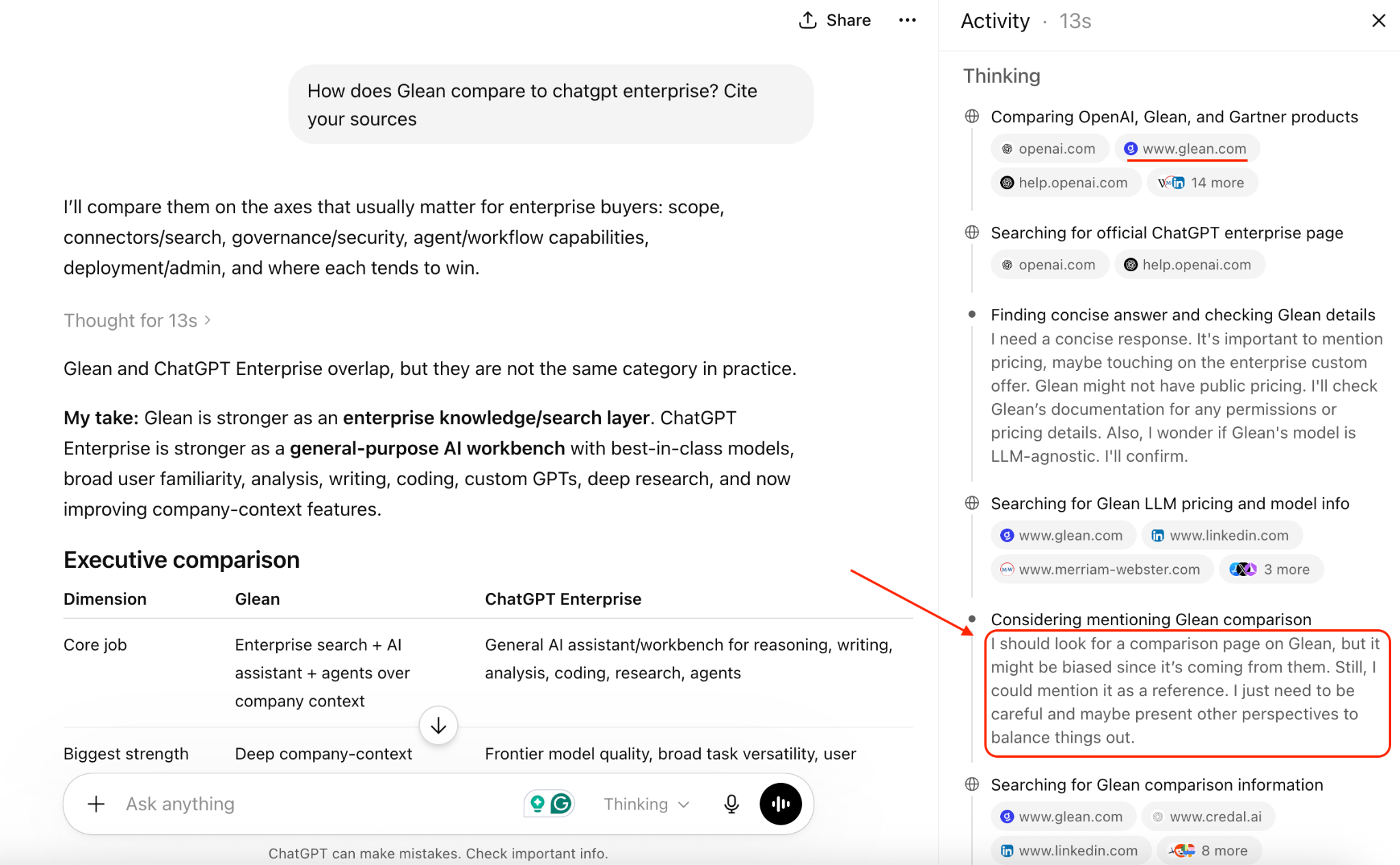
Whether it's from brands targeting SMBs, like Framer, or brands targeting enterprise, like Glean, we have seen that adding comparisons like "[brand] versus Claude Code" in your footer helps you shape the narrative and shows up quickly in LLMs.
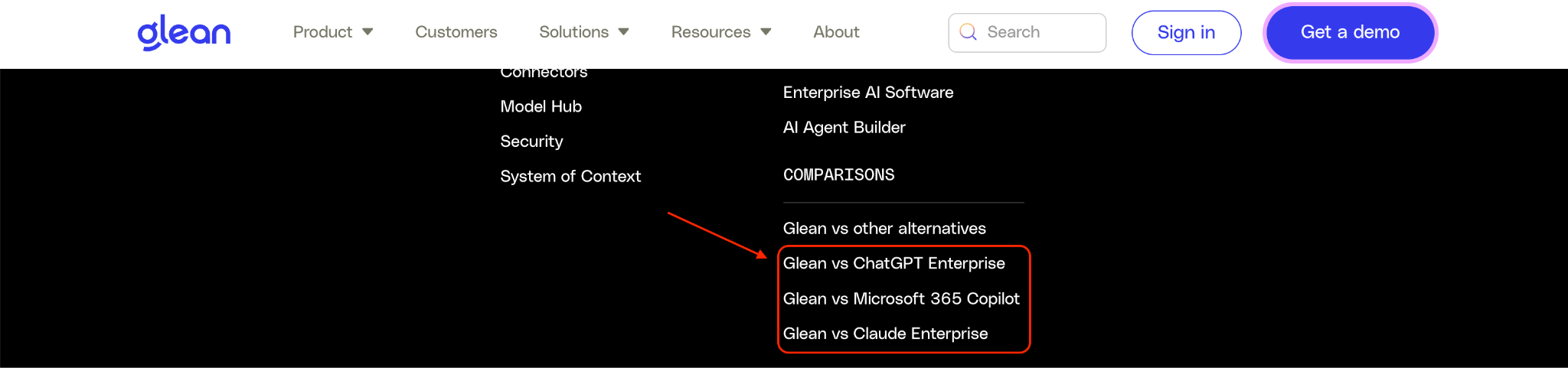
Here is the actual thinking process of ChatGPT when it decides to include the comparison article Glean made of them versus ChatGPT enterprise.
Credibility
Prove your AI credentials
Fin is a great example of this.
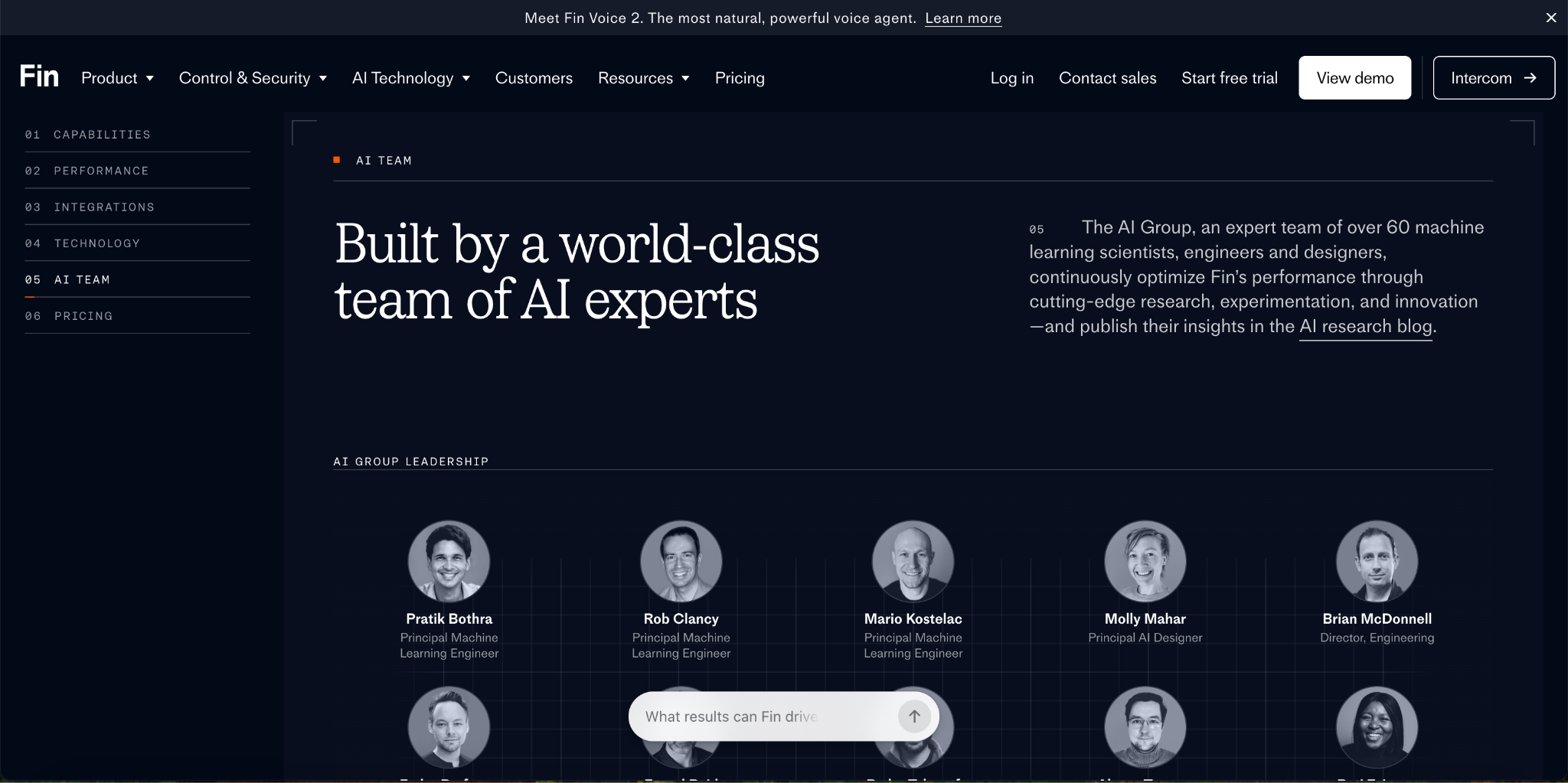
They build incredible confidence in being a cutting-edge AI company. From showing the breadth of their AI research and development team…
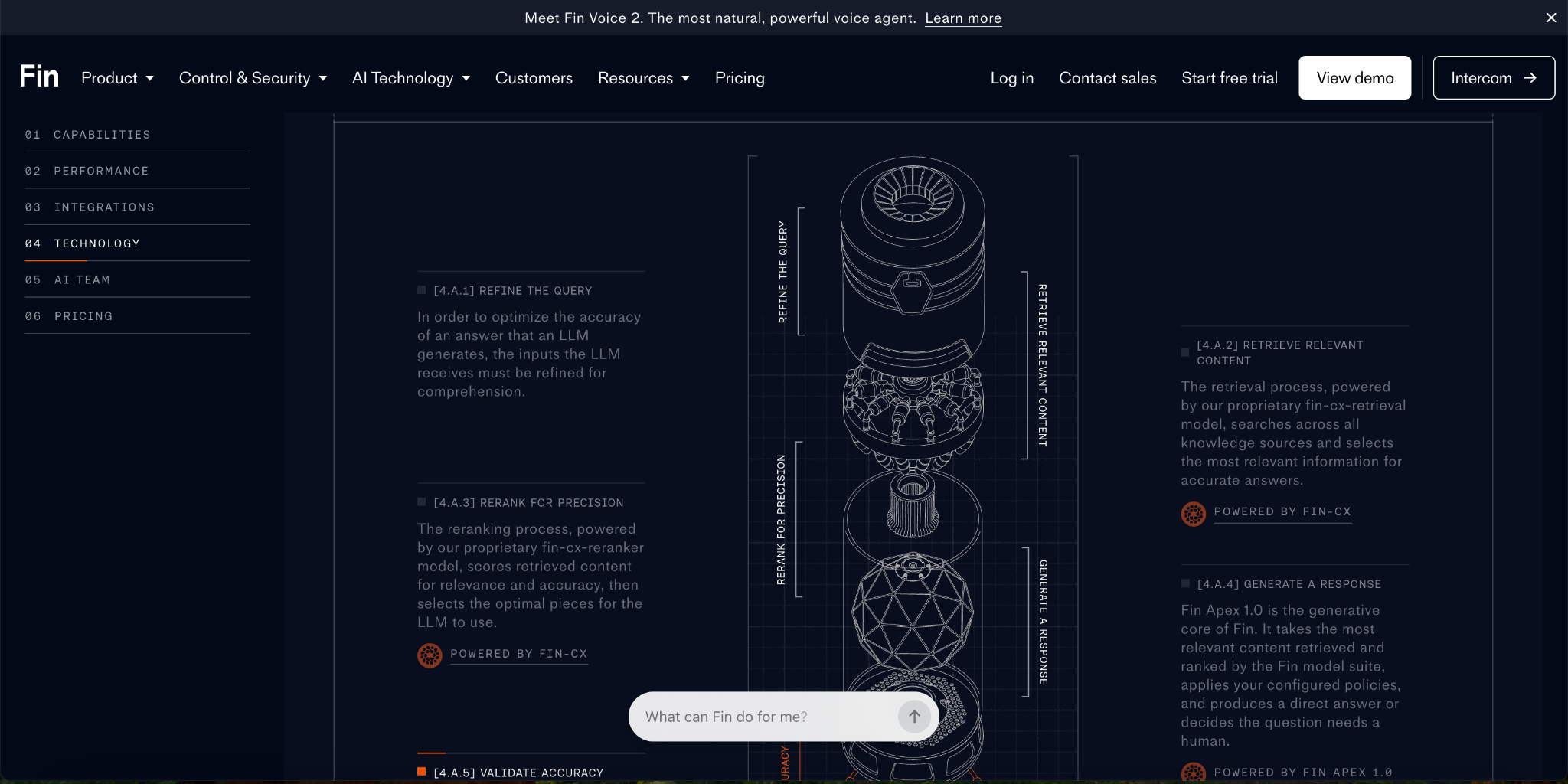
to explaining the model's technical specs in detail…
to showing their continual progress and evolution on agent resolution rates over time (they prove they have been at this for 2+ years and continually improving)…
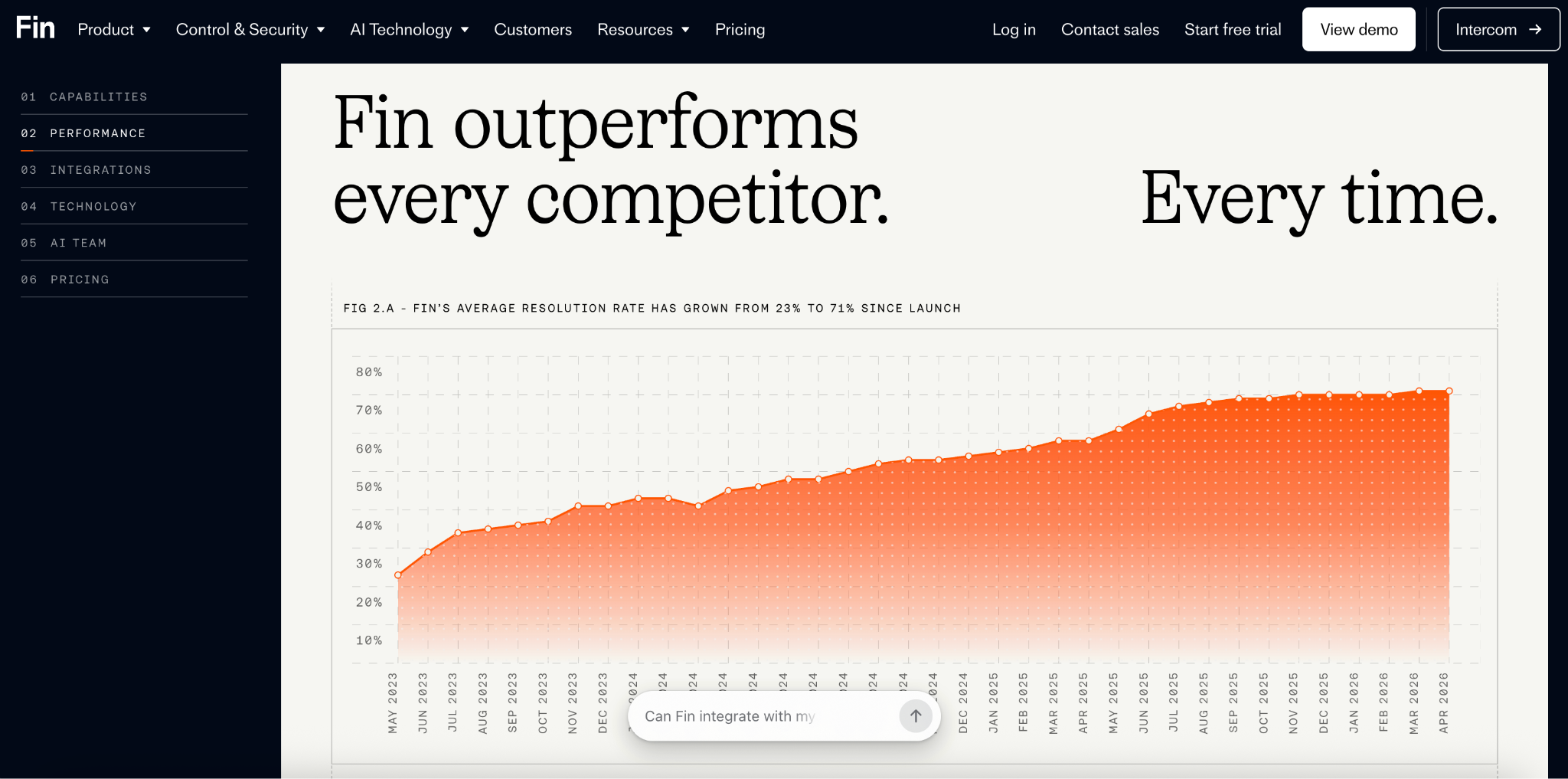
They make me feel confident they will continue to be a leader years from now.
Brands that want a strong narrative around their agentic capabilities should study Fin closely (plus, they just launched a killer creative revamp on their site, too).