When I joined DoWhatWorks and got access to our trove of A/B tests, I remember the most surprising learning was that customer logos lost in most tests.
And it was not just logos. Short quote testimonials underperformed, and G2 and third party review badges frequently lost. Nearly every company uses some type of social proof. So what is going on here?
To make this concrete, we will stay on one page type throughout: pricing pages.
Jotform, Navan
Third party review badges
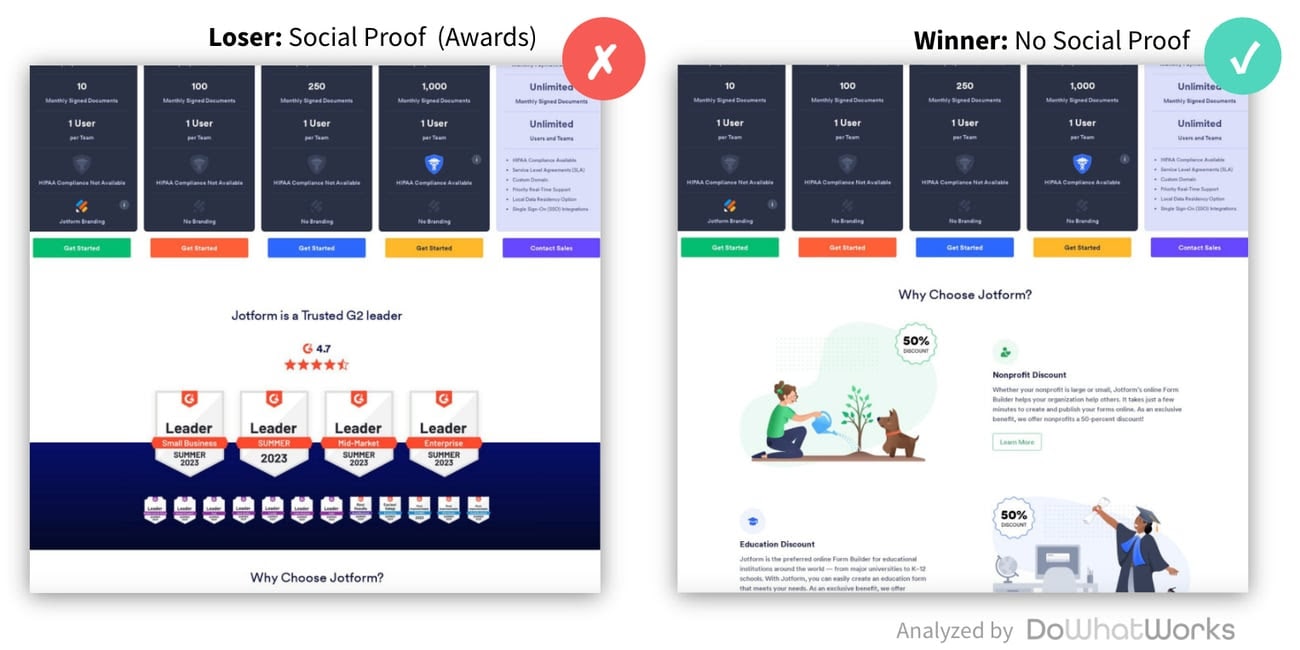
Here is a test from Jotform with and without G2 badges. 4.7 stars, category leader. It lost.
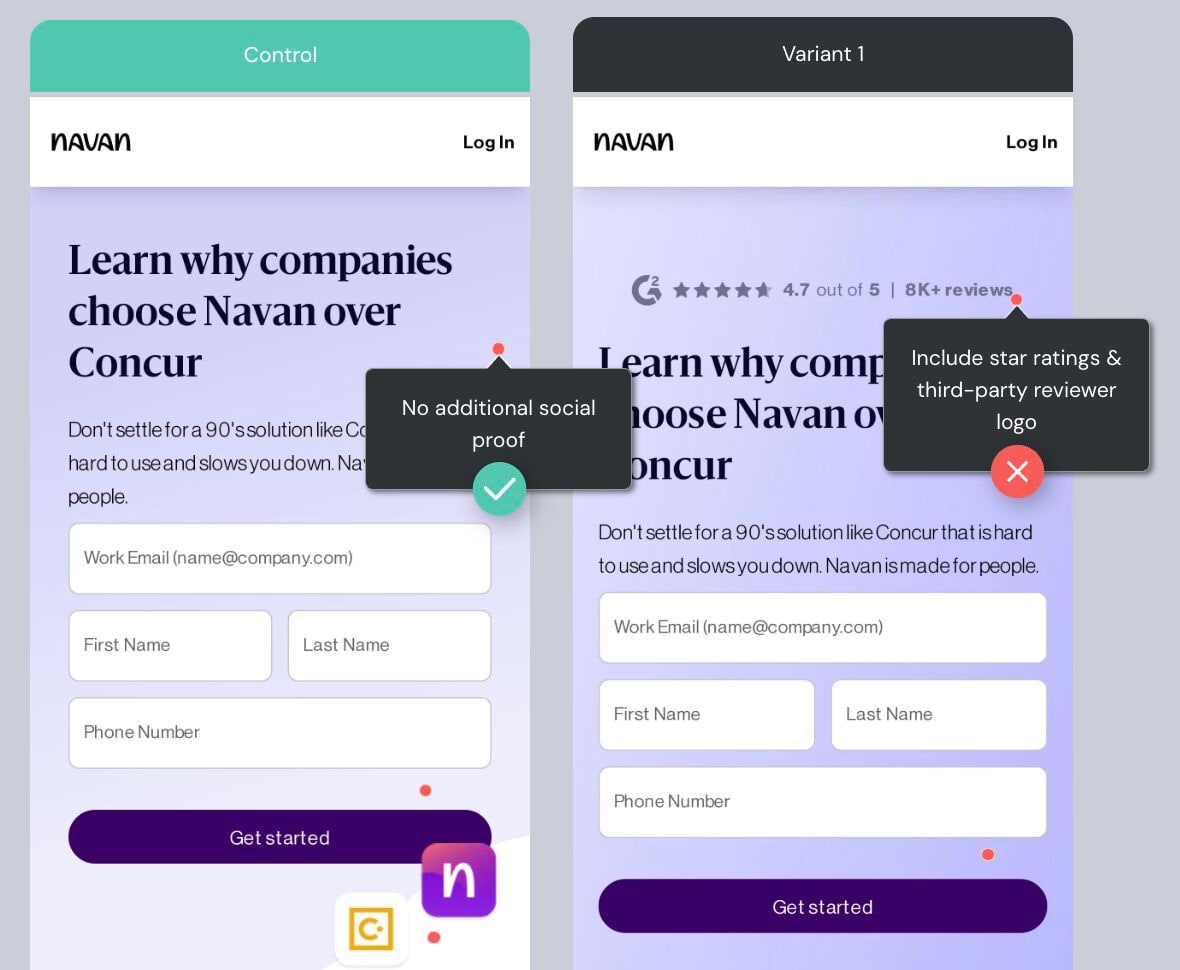
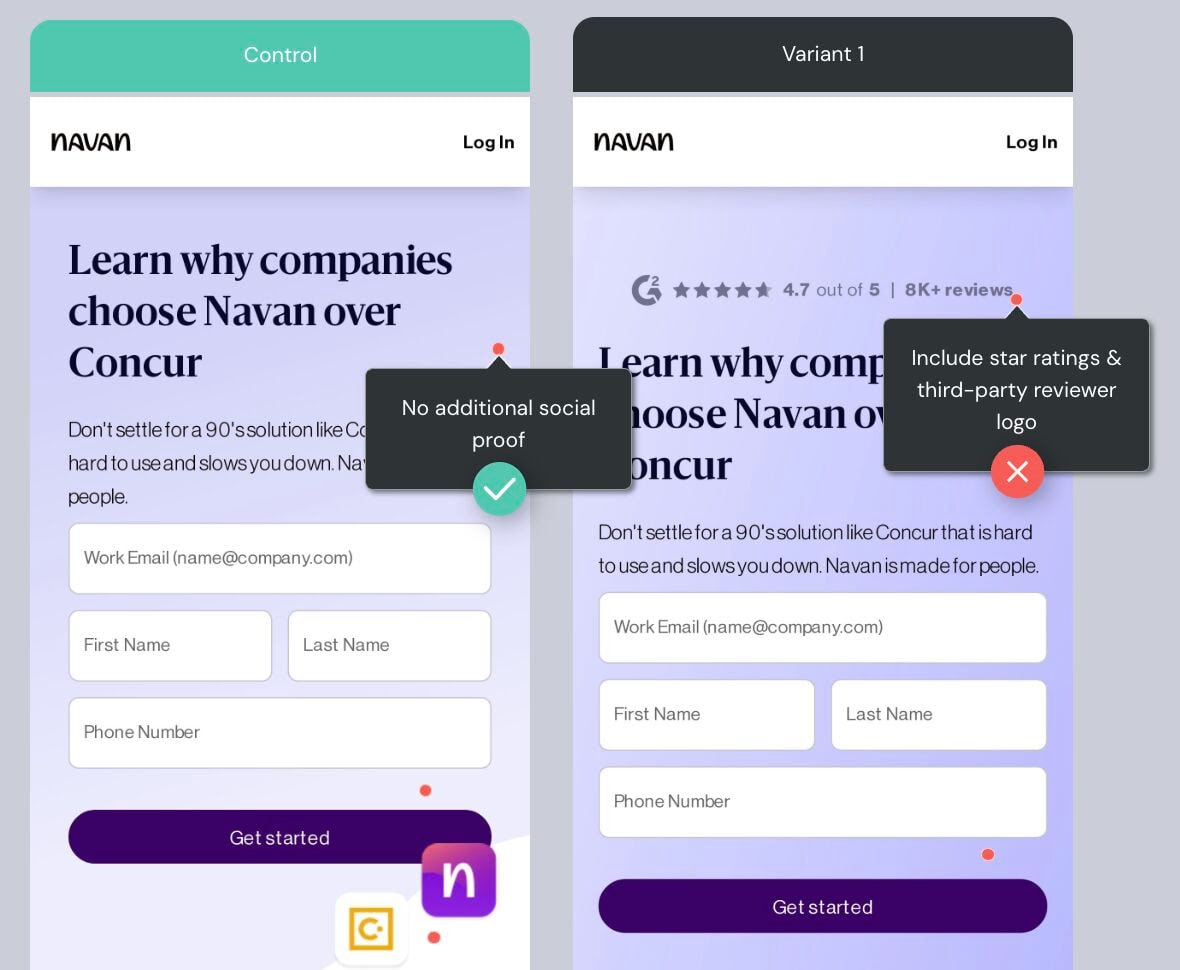
It also lost for Navan, who uses the G2 reviews above their signup form, despite 8,000 or more reviews and another top rating.
Trust issues due to pay to play. Sites like G2 have come under accusations of elevating brands willing to pay for placement, which undermines trust in them being impartial.
Page placement. On a pricing page someone is close to converting. Forcing more scrolling takes attention away from your core messaging, and a badge pulled directly from G2 links off your pricing page to a hub where they can explore your competition.
Unintended signaling. Badges dated 2022 or 2023 make me wonder whether you are still the category leader. “4.6 stars with over 400 reviews” makes me wonder why so few.
Social proof is there to increase confidence once someone is sold on your value proposition. At the top of the page you have not established it yet, so it gets glossed over.
Dropbox
Customer logos
Dropbox gave logos on the pricing page a test, and it flopped. They kept the version without them.
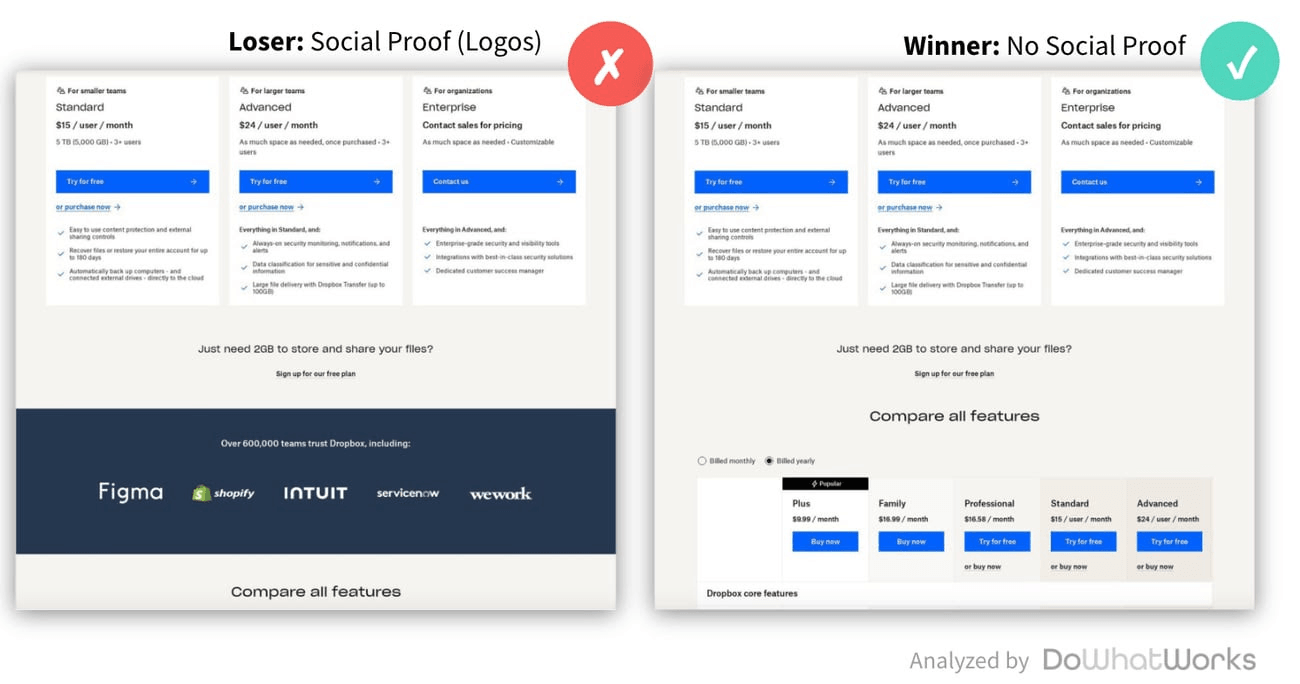
Logo blindness. If you are one of the top players, people already expect your customers to be the top brands in the market you serve. Naming them does not add credibility you already have.
Logo fit. Customers want to know your product will work for them. Ten logos from irrelevant industries will not land the way you want.
Logos lie. Many sites include a big name when one person or a small team has tried the product, and logo walls often include customers who have churned. Smart customers know not to trust it.
If you are going to use logos, make them something you can engage with, the way Clay attaches case studies to theirs, or something easily segmentable by industry, the way 7shifts does it.
Glofox
Short quote testimonials
We see time and time again that simple quote testimonials, like these from Glofox on their pricing page, lose in A/B tests.
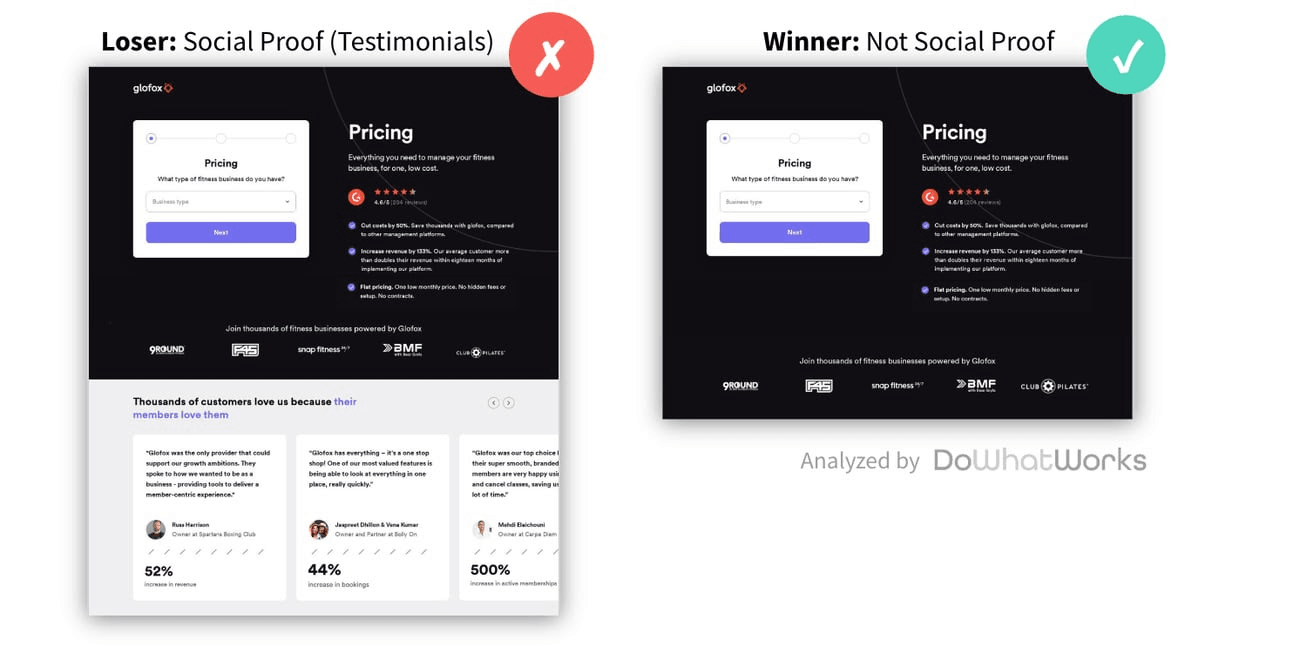
Lack of context and specificity. A generic claim that a brand is good to work with, or a generic result like “we increased revenue 50%”, falls flat. Give a specific before and after instead: “before using Webflow we were spending an extra $1,500 to $2,500 a month on WordPress devs, which we eliminated in the first quarter.”
They do not tell a story. A great testimonial gives a compelling before and after that a prospect can relate to.
Is this for people like me. With short testimonials it is hard for a prospect to quickly identify whether this came from a customer similar to them.
Social proof today is perhaps the most pronounced example of checkbox marketing out there. Teams feel like they are supposed to have logos, supposed to include quotes, on and on.
The best brands are instead finding ways to bring more context, more storytelling, and more data into their social proof, so it is useful and relevant to the person reading it.