Chapters
Timestamps to scrub to 01:40 The fake-ability test A good proxy for how valuable your social proof is: how easy would it be to fake?
08:25 Why customer logos lost Logos lost in most head-to-head tests. They are static, and they give the reader no way to tell whether that customer resembles them.
15:10 The logo bar that actually works Attaching case studies to individual logos adds the context a plain logo bar is missing.
23:45 Before and after beats generic praise Testimonials carrying a specific transition outperform generic quotes, and build more affinity with the buying persona.
31:20 The review badge problem Linking out to G2 sends a prospect to a page that lists your competitors, and those tests tend to lose to the control.
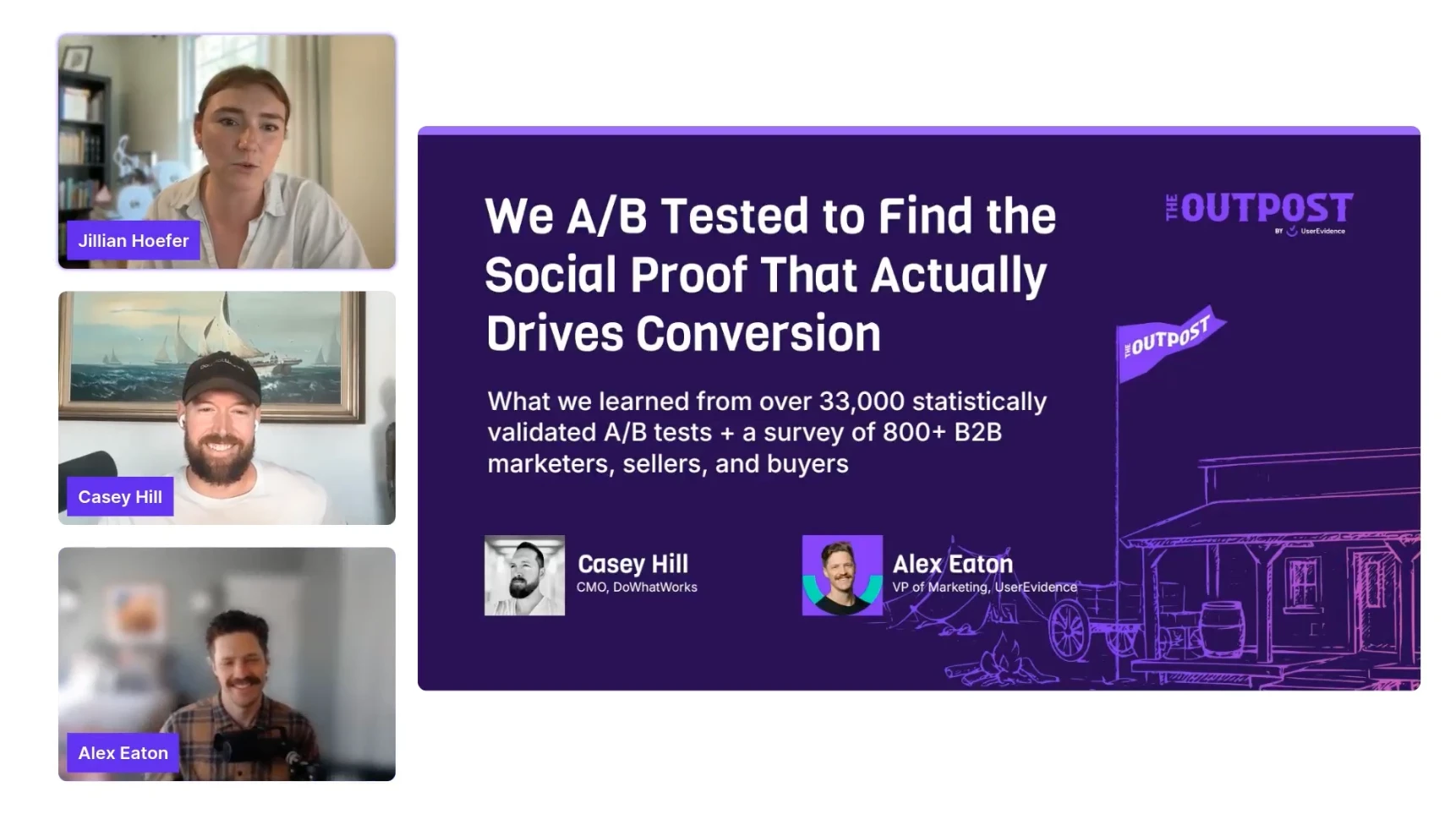
We joined UserEvidence to go through what our test database actually says about social proof, and where the conventional advice falls down.
The short version: most social proof is placed to reassure the team that shipped it, not the person reading it.
Most social proof is placed to reassure the team that shipped it, not the person reading it.
What to take from it
- ✓ Ask how easy your social proof would be to fake. If the answer is very, it is doing less than you think.
- ✓ A logo bar needs context attached, or it is decoration.
- ✓ Swap generic testimonials for ones that name a specific before and after.
- ✓ Think twice before sending prospects to a review site that also lists your competitors.