Trends & Insights
8/5/26
February 22, 2023
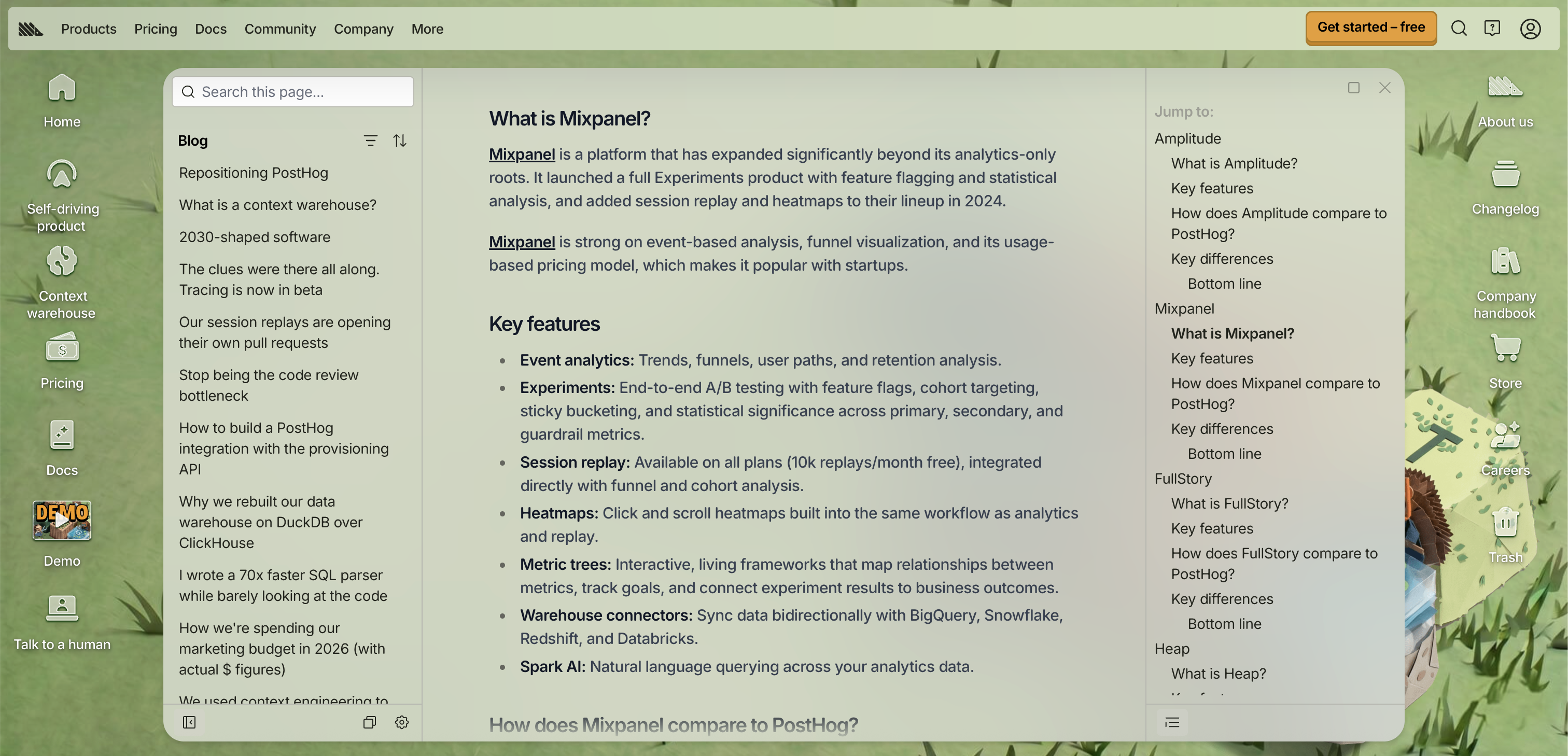
PostHog takes a counterintuitive approach to their comparison pieces.
They go completely positive.
They call out where their competitors are strong.
They list out specific features that the competitor has, and they pull directly from the competitors’ sites for how to describe positioning.
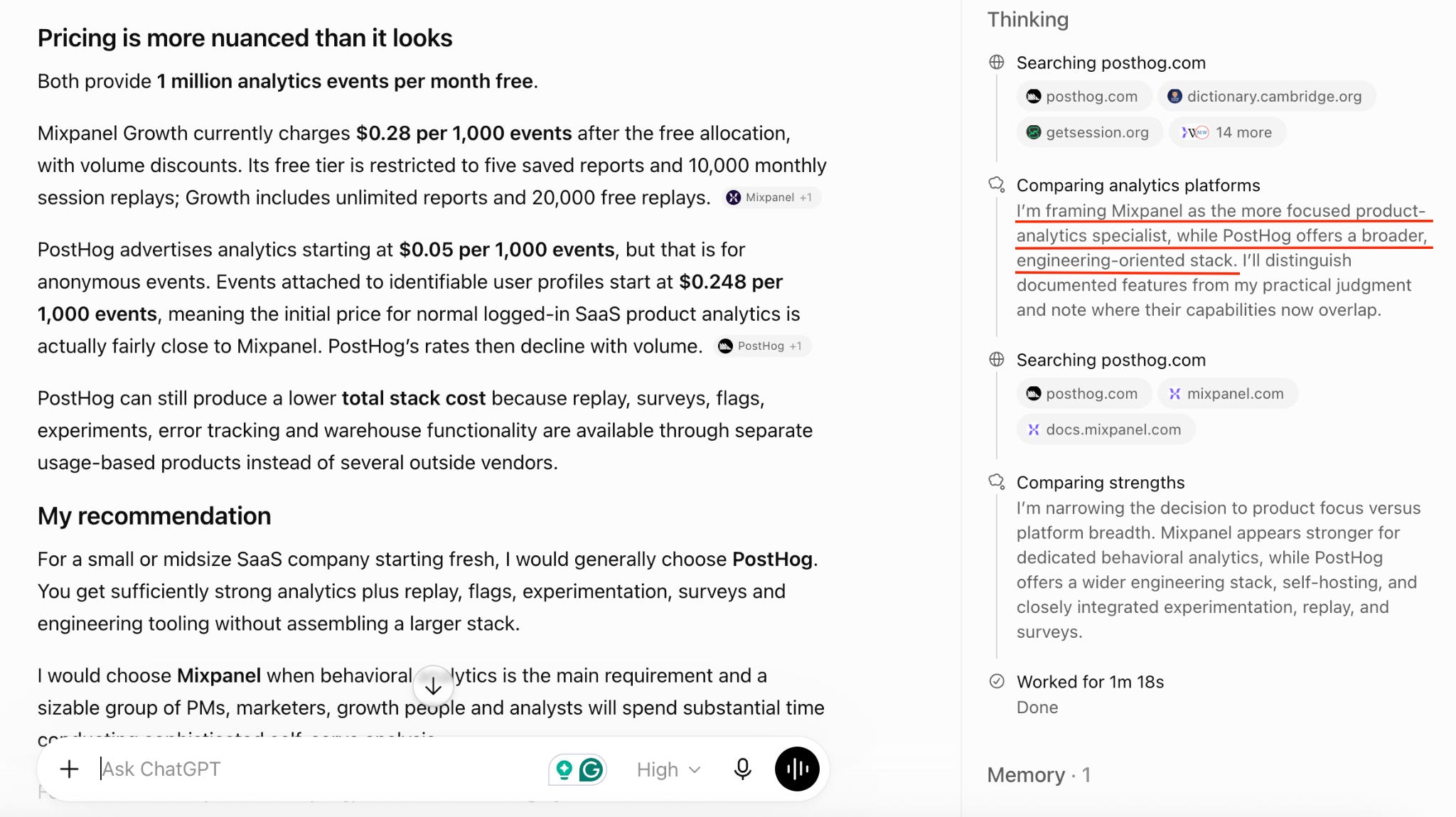
If you ask ChatGPT, Claude, or Gemini to tell you about Posthog vs. Mixpanel or Amplitude or other competitors, it not only will cite PostHog’s comparisons, but its thinking is heavily influenced by PostHog’s positioning.
The thinking notes in ChatGPT opens with… “I’m framing Mixpanel as more focused on product analytics, while PostHog offers a broader, engineering-oriented stack.”
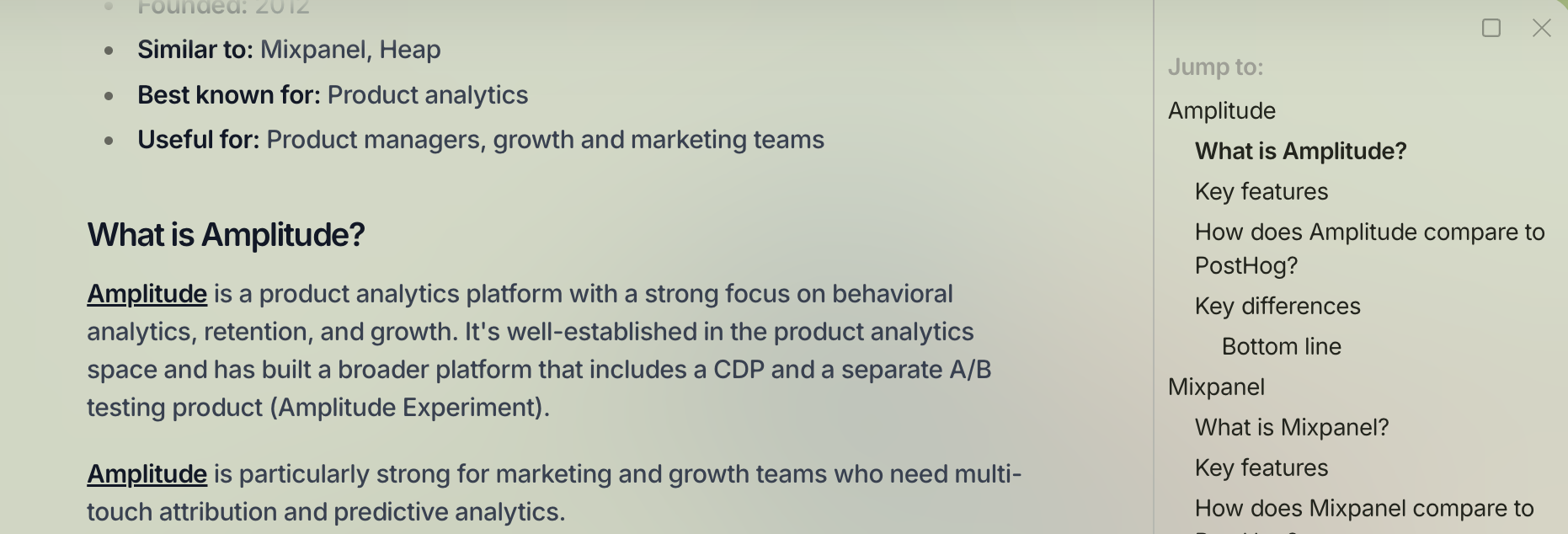
PostHog directly states in their comparison piece that Mixpanel is, “Best known for: Product analytics” and “Useful for: Product managers and growth teams” whereas PostHog is better equipped for “engineering-led teams”
Note: Across more than 40+ tested PostHog vs. comparison prompts on Claude, ChatGPT, and Gemini, PostHog’s comparison articles dominated citations, despite the fact that most competitors (Amplitude, Mixpanel etc) had higher Domain Reputations. There are several possible confounder variables, but the data seems to point to the value of positive sentiment, well structured and fact-based comparison content.
Ultimately, comparison articles from sites are approached with a lot of skepticism.
Your prospect assumes you will lie to them, say everything that is good about your solution, and cast stones at your competitors.
But you can create comparison content that not only builds more trust (and thus converts better) but also gets cited and visited more by doing the following…
1) Be positive about your competition. This builds trust with the prospect and puts what you say after about your own product in a better light.
2) Stick to defensible facts. Things they do, things you do.
3) Use the competitor’s positioning language. Literally go to their site and quote how they describe their key features. This makes a prospect feel like you are genuinely trying to accurately portray them.
4) Embrace LLM-friendly formatting. PostHog having clean sections of “best known for”, “key features”, “Pricing” etc makes that more likely to be cited in LLMs (as we saw in the testing run)
If you want to create better comparison content, I strongly recommend reading through how PostHog approaches this.
___________________________________________________________________________________________________________________________________________________________________________________
Looking to validate your next website idea before you push it live?
Should you have 2 CTAs vs. 1?
Should you have a video or static image in your hero?
Should you describe your new agent with benefits language or capabilities language?
Should you use a grid or a carousel to showcase your product tiles?
DoWhatWorks has an agent that looks at tens of thousands of A/B tests from the world’s top brands and gives you instant feedback and competitive intelligence on what has been tested and what has won.
Join the waiting list to be among the first companies to have access to this technology